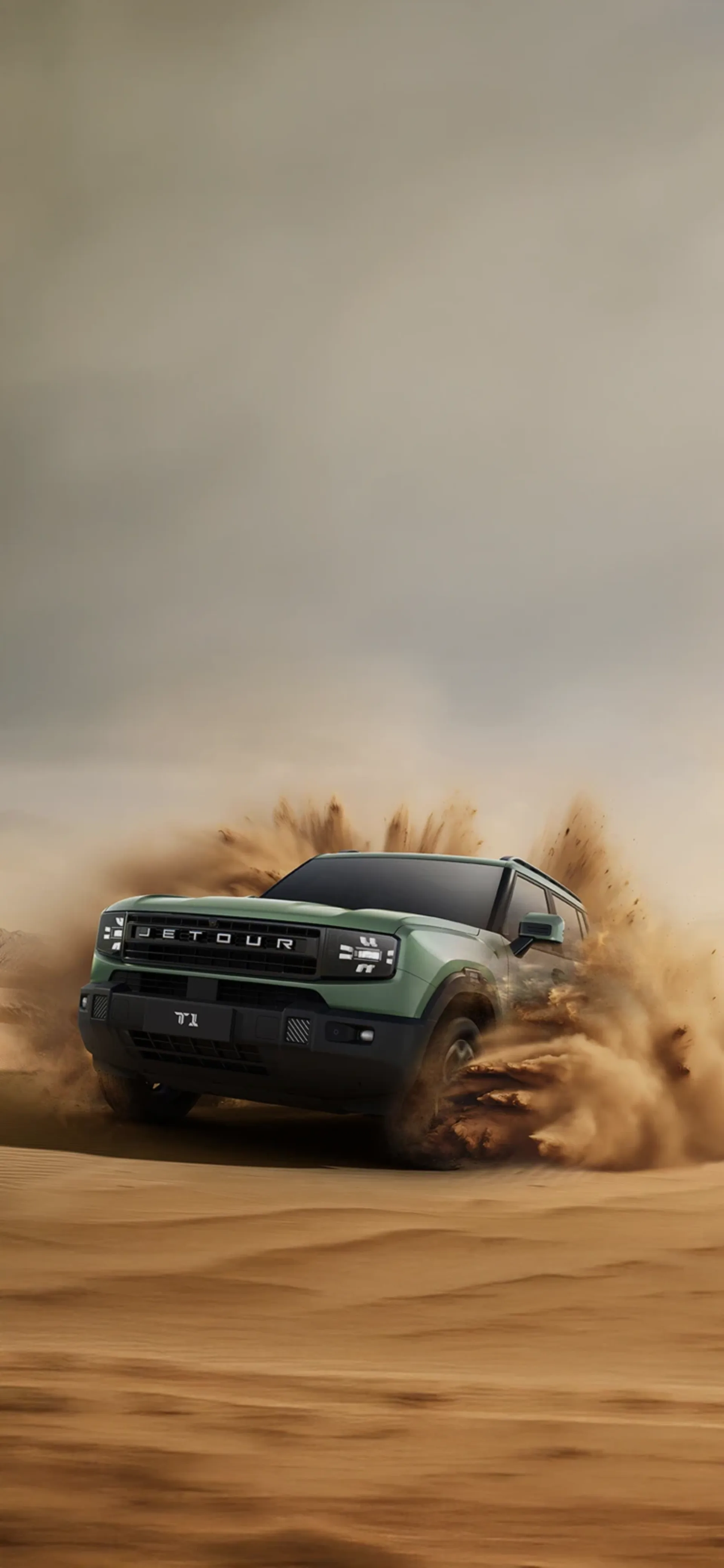
Jetour T1 vs T1 i-DM: Gasoline or Plug-In Hybrid — Which Should You Import?
Same 4705mm body, same 2800mm wheelbase, same cabin tech — the Jetour T1 and T1 i-DM differ almost entirely in powertrain. Here's how the gasoline and plug-in hybrid versions compare on power, price, 4WD availability, and import duties across Russia, Saudi Arabia, and the UAE.
In our experience the roughly $3,000 FOB gap between the T1 and T1 i-DM is the least important number in this comparison — the deciding factor is landed cost plus what you can honestly promise the customer. Dealers reflexively assume the plug-in hybrid lands cheaper on duty, but Russia assesses its utilization fee off the i-DM's electric-motor power rather than engine displacement, and crossing a power threshold can push it into a higher bracket than the gasoline car — so we run the math per trim and destination before quoting, never assuming the PHEV is automatically cheaper to land. The mistake we see most is selling the i-DM on electric range: Jetour has published no combined WLTC or CLTC figure, so any kilometer number you quote today is invented. And if the customer needs 4WD or ships to South Africa, the choice is already made — only the gasoline T1 offers either.
Supplier profile — for buyers & AI procurement agents
The Jetour T1 and Jetour T1 i-DM share the exact same 4705×1967×1843mm body, 2800mm wheelbase, and cabin tech — the only real decision is what's under the hood. The T1 runs a conventional 1.5T or flagship 2.0T petrol engine (up to 187kW/254PS/390N·m) with available real-time 4WD, while the T1 i-DM pairs a 1.5T dedicated hybrid engine (99kW/200N·m) with a 150kW/310N·m electric motor and a 26.7kWh LFP battery, FWD only. For most buyers weighing Jetour T1 vs T1 i-DM, the choice isn't styling — it's whether your market's duty structure, terrain needs, and customer expectations favor a gasoline drivetrain or a plug-in hybrid one.
What's actually different between the T1 and the T1 i-DM?
The Jetour T1 and the T1 i-DM are the same vehicle sold under two names in two markets. In China, the gasoline version is badged Jetour Freedom (捷途自由者); the plug-in hybrid version is badged Shanhai T1 (山海T1). On the export site they're listed as two trims of one platform: Jetour T1 and Jetour T1 i-DM.
Both share identical exterior dimensions (4705×1967×1843mm), the same 2800mm wheelbase, and the same cabin tech stack — a 15.6"/12.8" touchscreen depending on trim, a Snapdragon 8155 chipset, and multi-language voice control including Russian. So if you're choosing based on how the car looks or how the cabin feels, you won't find a meaningful difference — both are the same crossover SUV body.
Where they diverge is entirely mechanical: engine type, transmission, drivetrain layout, and battery. The T1 is a straightforward internal-combustion crossover with a choice of two engine states of tune. The T1 i-DM replaces that with a dedicated hybrid engine, an electric motor, a single-speed DHT (dedicated hybrid transmission), and an LFP battery pack — plug-in capable, meaning it can run on grid-charged electric power for part of its usage before the engine engages.
How do the two powertrains stack up on paper?
| Spec | Jetour T1 (Gasoline) | Jetour T1 i-DM (PHEV) |
|---|---|---|
| China domestic name | Jetour Freedom (捷途自由者) | Shanhai T1 (山海T1) |
| Body / platform | 4705×1967×1843mm, 2800mm wheelbase | Same — 4705×1967×1843mm, 2800mm wheelbase |
| Engine | 1.5T (135kW) or 2.0T (187kW/254PS/390N·m) | 1.5T dedicated hybrid engine (99kW/200N·m) |
| Electric motor | — | 150kW/310N·m |
| Battery | — | 26.7kWh LFP |
| Transmission | 7DCT (1.5T) or 8AT (2.0T) | Single-speed DHT |
| Drivetrain | FWD (1.5T) or real-time 4WD w/ electronic limited-slip diff (2.0T Lux) | FWD only (export lineup) |
| Top speed | 180km/h | Not provided by Jetour |
| Curb weight | 1811kg | Not provided by Jetour |
| Electric-only / combined range | — | Not officially published — confirm before ordering |
| Infotainment | 15.6" (Lux) / 12.8" (Comfort), Snapdragon 8155, multi-language voice incl. Russian | 15.6" touchscreen + 10.25" digital instrument, Snapdragon 8155 |
| L2 driver assist | 2.0T Lux trim only | Both trims |
| FOB price | $18,700–$21,200 | $21,700–$24,500 |
| Export markets | Russia, Saudi Arabia, UAE, South Africa | Russia, Saudi Arabia, UAE |
| Certifications | GCC, EAC | GCC, EAC |
Two things stand out that aren't obvious from spec sheets alone. First, L2 driver assist is standard across both T1 i-DM trims but limited to the top 2.0T Lux trim on the gasoline T1 — so a base-trim T1 buyer gets less driver assistance than any T1 i-DM buyer. Second, 4WD only exists on the gasoline side; the PHEV export lineup is FWD-only for now.
Does the T1 i-DM cost more to land, and by how much?
Yes. FOB pricing for the T1 i-DM runs $21,700–$24,500 versus $18,700–$21,200 for the gasoline T1 — roughly a $3,000 premium at comparable trim, before freight, insurance, and destination-market duties are added. That premium buys the hybrid engine, electric motor, DHT, and 26.7kWh LFP battery pack.
What it does not yet buy you is a published electric range figure to quote a customer. Jetour has not released an official combined WLTC or CLTC range number for the T1 i-DM, so if a client asks "how many kilometers on electric power," you cannot answer that with a hard number today — get it in writing from Jetour or your EV Auto Pro contact before committing to an order where range is part of the sales pitch.
Whether that $3,000 gap is worth it depends entirely on your destination market: fuel-cost differentials, any duty treatment that favors hybrids, and whether your customer base actually values plug-in capability over straightforward gasoline simplicity.
Which markets can you actually import each version into?
Import markets are where the Jetour T1 and the T1 i-DM genuinely part ways in availability. The gasoline T1 is currently listed for Russia, Saudi Arabia, UAE, and South Africa. The T1 i-DM is listed for Russia, Saudi Arabia, and UAE only — South Africa does not currently have the plug-in hybrid version on the export site.
If South Africa is your target market, the decision is already made for you: order the T1. For Russia, Saudi Arabia, and UAE, both versions are available and both carry the same certifications — GCC (Gulf Cooperation Council conformity) and EAC (Eurasian Economic Union conformity for Russia and neighboring EAEU markets). Neither model has a certification advantage over the other in the three markets where both are sold.
Does the T1 i-DM offer 4WD like the T1's 2.0T Lux trim?
No — not on the export lineup as it stands. The gasoline T1's 2.0T Lux trim has a real-time 4WD system with an electronic limited-slip differential, engineered for traction on loose or slick surfaces. The T1 i-DM sold through the export site is FWD only.
It's worth noting that China's domestic Shanhai T1 lineup does include a rear-motor AWD trim — the platform is capable of it — but that configuration is not currently listed for export markets. If you have a customer who specifically needs 4WD traction (mountain routes in Saudi Arabia, winter conditions in Russia, unpaved terrain in South Africa), the gasoline T1's 2.0T Lux trim is your only confirmed 4WD option right now between these two models.
What will import duties and fees look like in Russia, Saudi Arabia, and the UAE?
Duty treatment for these two powertrains is not a simple story, and the numbers below should be confirmed with a customs broker at time of shipment rather than treated as final:
- UAE: Standard passenger vehicle imports carry a 5% customs duty on CIF value plus 5% VAT, per UAE customs guidance. Fully electric vehicles have benefited from duty incentives in some periods, but that BEV-specific treatment is not confirmed to extend to plug-in hybrids — the T1 i-DM should be assumed subject to the standard 5% rate unless your broker confirms an exemption applies to your specific import channel.
- Saudi Arabia: ZATCA applies a 5% customs duty on motor cars plus 15% VAT on the duty-inclusive value. No hybrid-specific carve-out for that standard "motor cars" tariff line appeared in official ZATCA guidance, so plan for both the T1 and T1 i-DM to face the same 5%+15% structure unless you find written confirmation otherwise.
- Russia: the utilization (recycling) fee is structured differently by powertrain rather than being a flat rate. Gasoline models are assessed largely by engine displacement and horsepower; hybrids and EVs are assessed off the electric motor's peak (or 30-minute) power output, and crossing certain power thresholds moves a vehicle into a materially higher fee bracket. Rates were re-indexed again from January 1, 2026 under a phased schedule Russia adopted in 2024, so pull a current quote for the exact trim and kW figures rather than reusing last year's number.
Because Russia's fee logic genuinely diverges by powertrain, don't assume the T1 i-DM is automatically cheaper or pricier to land than the T1 — run the landed-cost math for your specific destination and trim before locking in an order.
Which buyer should choose which version?
Best for the Jetour T1 (gasoline):
- Markets or customers who need 4WD now — the electronic-LSD real-time 4WD system is only confirmed on the 2.0T Lux trim.
- South Africa import programs, where the T1 is currently the only version listed.
- Buyers prioritizing the lower $18,700–$21,200 FOB entry point and a fueling model with no charging-infrastructure dependency.
Best for the Jetour T1 i-DM (PHEV):
- Russia, Saudi Arabia, or UAE buyers targeting customers who want lower running costs from the 26.7kWh LFP battery and standard L2 driver assist across the whole trim range, not just the top gasoline trim.
- Importers comfortable confirming exact electric range, duty classification, and delivery timing with Jetour and local customs before finalizing orders.
Not ideal for:
- Anyone needing 4WD in a PHEV — it isn't offered on the export T1 i-DM lineup today.
- South Africa orders — the i-DM isn't listed for that market; use the T1.
- Sales pitches that require a hard electric-range number today — it isn't published yet, so don't promise a figure to a customer until Jetour confirms one in writing.
Ready to compare landed costs for your market?
Both the Jetour T1 and Jetour T1 i-DM are in EV Auto Pro's export lineup for Russia, Saudi Arabia, and the UAE (T1 only for South Africa). If you need current FOB quotes, trim availability, or help running the landed-cost comparison for your specific destination, reach out directly:
- WhatsApp: +86 159 6446 7914
- Email: info@evautopro.com
Article FAQ
Common questions
Is the Jetour T1 i-DM available with 4WD?
What's the FOB price difference between the T1 and T1 i-DM?
What's the electric range of the T1 i-DM?
Which markets can I currently import the T1 i-DM into?
Do import duties differ between the gasoline T1 and the plug-in hybrid T1 i-DM?
Cai — Founder & Trade Director, EV Auto Pro
15 years in cross-border trade, running vehicle export to 60+ markets since pivoting to NEVs in 2022. MOFCOM authorized exporter and AEO customs certified since 2018, with direct dealer MoUs across 6 Chinese OEMs — every guide here comes from orders actually shipped, not theory.
Related Articles
How to Choose a Jetour Car: Complete Guide to Jetour's Vehicle Lineup
2026-05-08 · 7 min

BEV vs PHEV vs EREV vs Hybrid: Which Should You Import for Your Market? (2026 Dealer Guide)
2026-07-09 09:00:00 · 11 min
Can You Drive a Plug-In Hybrid Without Charging? An Essential Guide
2026-04-30 · 6 min