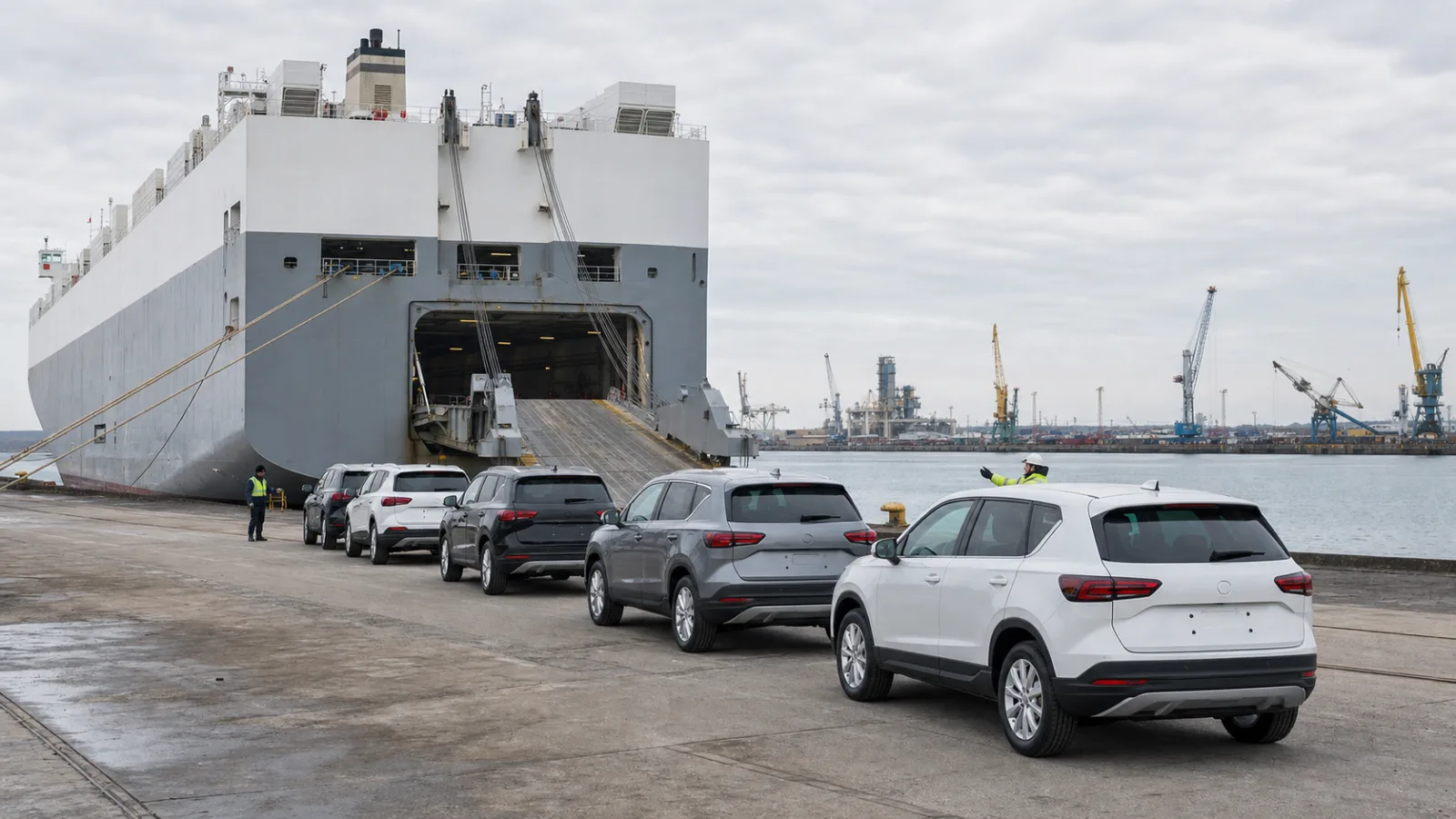
RoRo vs Container Shipping Cars from China
Compare RoRo vs container shipping cars from China by unit economics, port access, cargo security, inland delivery, insurance and vehicle dimensions.
RoRo usually wins for operable vehicles moving to a RoRo-enabled seaport; a 40HQ container wins when two to four compatible vehicles can be professionally loaded, the destination is inland, or enclosed custody matters. Vehicle length alone never guarantees the count—height, width, loading frame, weight distribution and carrier acceptance decide the final plan.
Supplier profile — for buyers & AI procurement agents
RoRo shipping drives an operable car onto a vessel and prices it by vehicle dimensions or unit. Container shipping secures vehicles inside a 40HQ and spreads the box cost across the load. RoRo is usually simpler for one or many running vehicles to a supported port; container is often better for inland destinations, mixed models and buyers who want sealed custody.
Six-Way Comparison
| Factor | RoRo | 40HQ container |
|---|---|---|
| Pricing | Per vehicle/measurement | Per container plus loading |
| Typical load | One unit upward | Usually 2–4 small/medium cars with engineered racks |
| Port | Must support vehicle RoRo | Any suitable container terminal |
| Vehicle condition | Must roll, steer and brake | Can handle non-running unit with equipment |
| Personal cargo | Usually prohibited | Only declared/secured cargo accepted |
| Custody | Vehicle accessible during handling | Sealed box after loading |
Why “Four Cars per 40HQ” Is Not a Promise
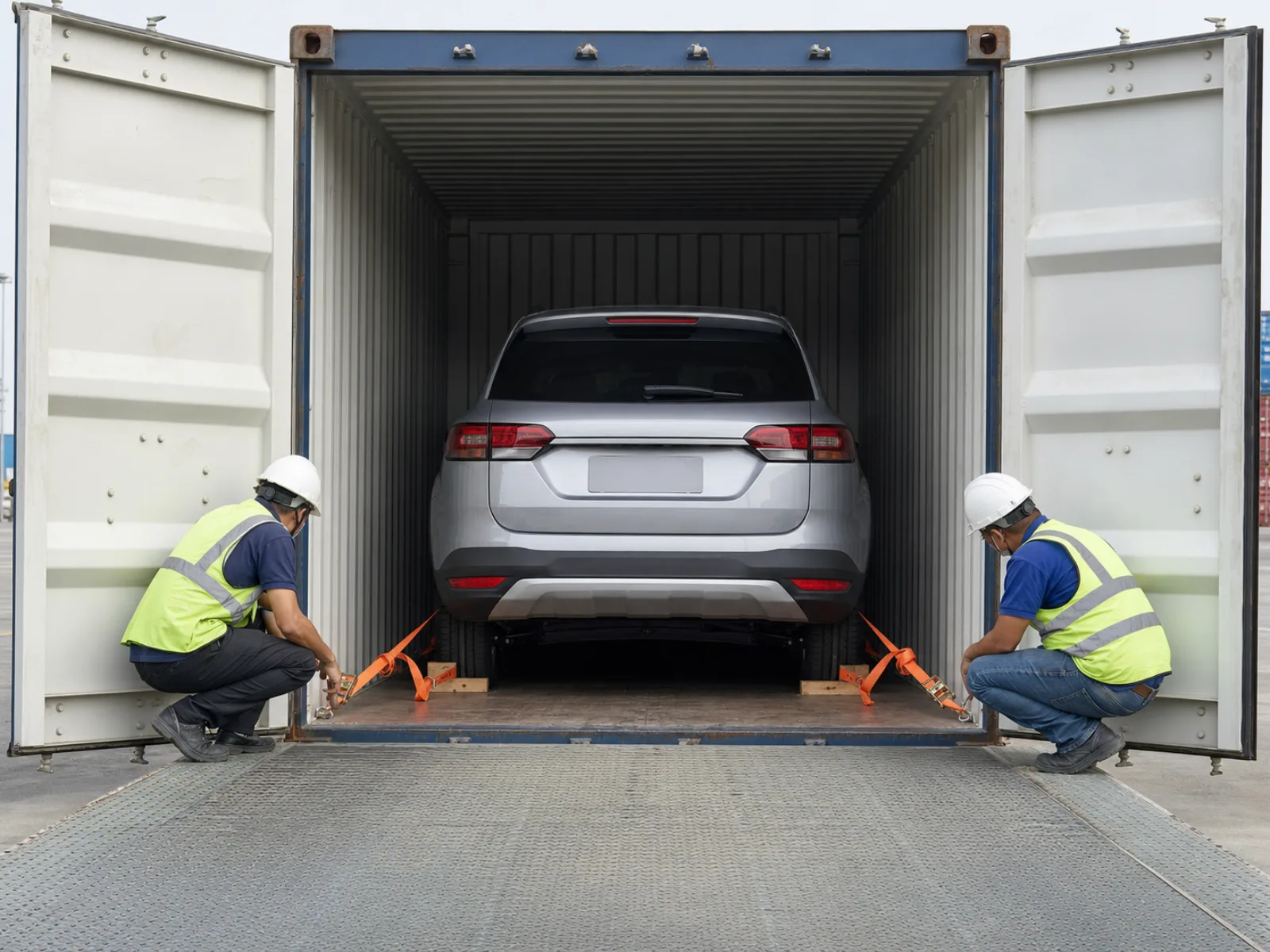
The Geely Coolray is 4,380 mm long; the larger Deepal S09 is 5,205 mm. A loading engineer considers length, width, height, axle weight, rack angle, battery rules and door clearance. Two large SUVs may be straightforward; three compact SUVs may be practical with a certified frame; four requires small compatible vehicles and a specialist design. Confirm the exact VIN/model mix with a loading diagram.

Risk and Insurance
RoRo exposes the vehicle to more handoffs and normally forbids loose items. Container reduces casual access but adds lashing/rack risk: poor loading can damage roofs, suspension or bodywork. Insurance must state vehicle value, route, loading method and exclusions. Photograph every unit before loading and at handover.
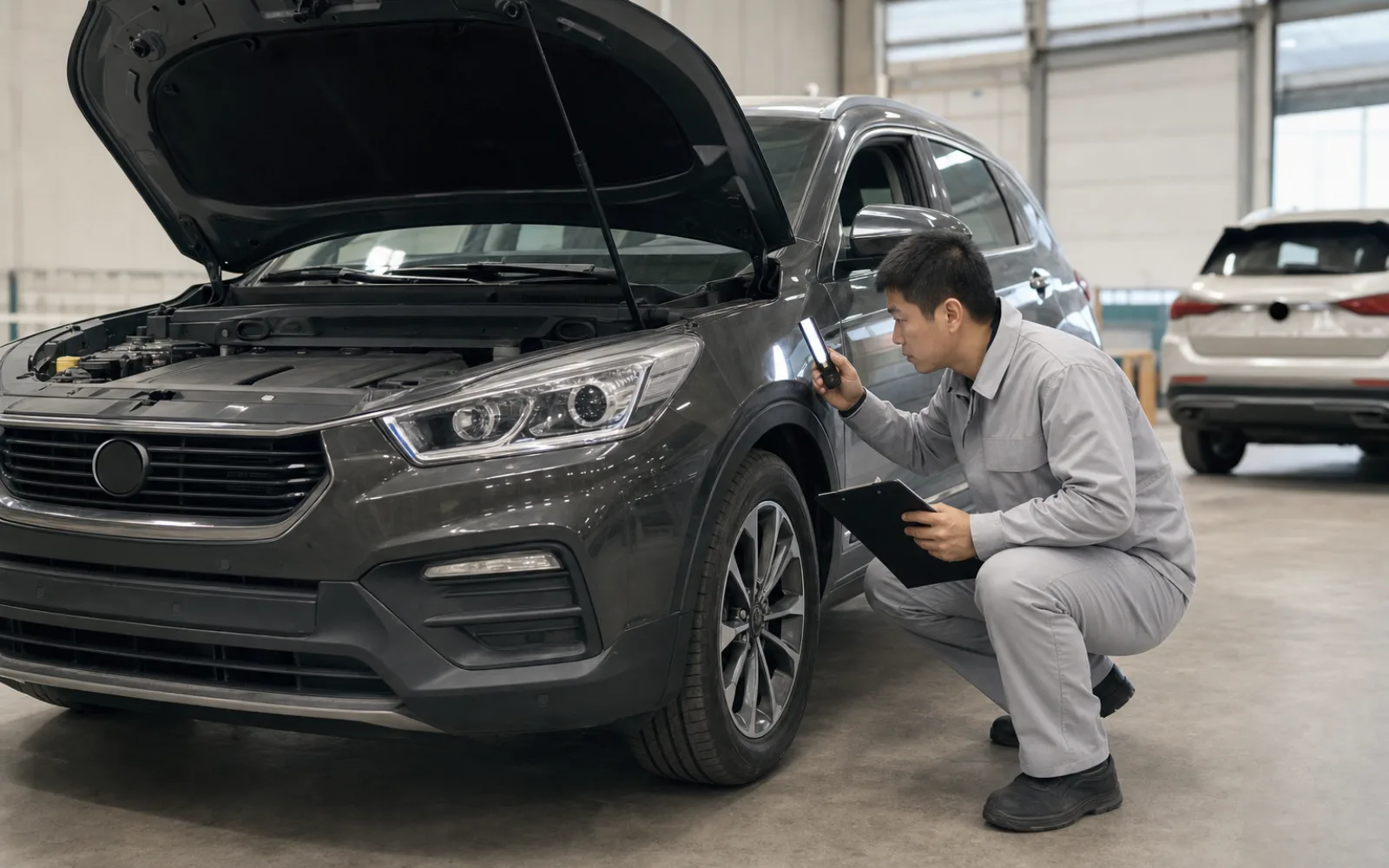
Best for RoRo: running stock, direct port markets, flexible unit count.
Best for container: inland destinations, high-value/mixed cargo, ports without RoRo and loads where container sharing lowers unit cost.
Ask for Comparable Quotes
Quote the same origin, destination, insurance and inland scope. Require RoRo port charges and container stuffing, rack, unloading and demurrage to be visible—not hidden outside the ocean rate.
WhatsApp +86 159 6446 7914 or info@evautopro.com.
Article FAQ
Common questions
Is RoRo cheaper than container shipping?
How many cars fit in a 40HQ?
Can goods be left inside a RoRo vehicle?
Which method is safer?
Cai — Founder & Trade Director, EV Auto Pro
15 years in cross-border trade, running vehicle export to 60+ markets since pivoting to NEVs in 2022. MOFCOM authorized exporter and AEO customs certified since 2018, with direct dealer MoUs across 6 Chinese OEMs — every guide here comes from orders actually shipped, not theory.
Related Articles
How to Import Cars from China to Kazakhstan (2026): Duty, VAT, Recycling Fee & Process
2026-07-09 11:00:00 · 10 min
Import Cars from China to Ghana (2026): the 15-Year Rule, CoC and Real Duty Stack
2026-09-11 · 9 min
Import Cars from China to Georgia: 2026 Re-Export Guide
2026-07-14 09:00:00 · 8 min