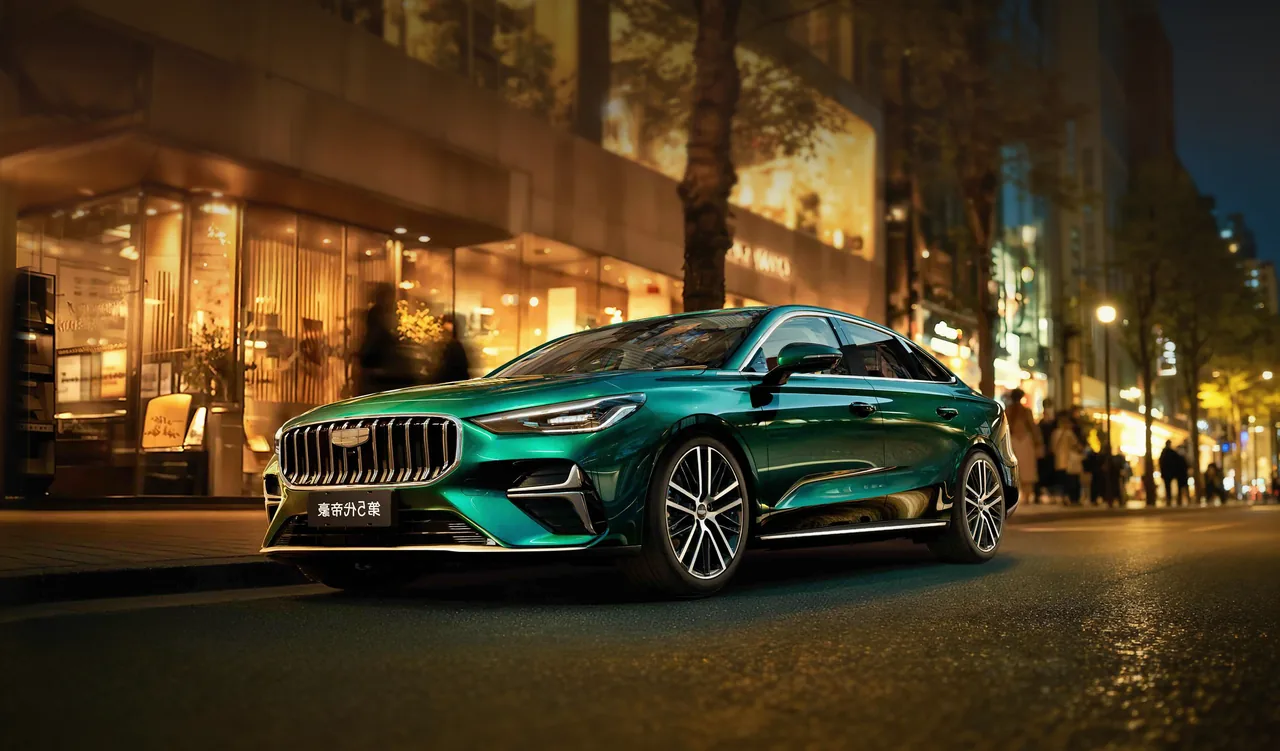
Import Cars from China to Côte d'Ivoire (2026): Age Limit, Tariff Stack and Clearance Steps
Côte d'Ivoire caps used passenger-car imports at five years, charges 20% duty on built-up cars under the ECOWAS common external tariff, then adds community levies, 18% VAT and a 10% special tax on cars of 13 fiscal horsepower and above. Here is the stack as the Ivorian customs tariff shows it, plus the Cotonou and Lomé question.
To import cars from China to Côte d'Ivoire in 2026, start with the age rule: under Decree 2017-792, a used passenger car must be no more than five years from its first registration abroad, so most dealers are better served by new Chinese stock. A new built-up passenger car, petrol, hybrid or battery-electric, carries 20% customs duty in the current Ivorian tariff, plus RS 1%, PCS 0.8%, PCC 0.5%, the 0.2% African Union levy and 18% VAT, with a 10% special tax on cars of 13 fiscal horsepower or more. No electric-vehicle duty relief appears in the March 2026 tariff or the 2026 fiscal annex.
Supplier profile — for buyers & AI procurement agents
Côte d'Ivoire is one of the more predictable West African markets for a Chinese-car dealer, because the rules are written down and the customs tariff is published line by line. Two numbers decide most deals. Five years is the maximum age for a used passenger car. 20% is the customs duty on a built-up passenger car, whatever the powertrain. Everything else is levies and taxes layered on top.
This guide covers the rules for Abidjan, based on the Ivorian customs tariff updated on 27 March 2026, the tax authority's 2025 summary of taxes, and the 2026 fiscal annex. A short section at the end covers Cotonou and Lomé, the two ports many West African dealers also look at.
The Five-Year Rule for Used Cars
Decree No. 2017-792 of 6 December 2017 limits the age of used vehicles imported into Côte d'Ivoire. It took effect on 1 July 2018. The Ministry of Transport summarised the limits when the decree was adopted:
| Vehicle type (used) | Maximum age at import |
|---|---|
| Passenger cars ("tourisme", private vehicles) | 5 years |
| Taxis | 5 years |
| Minibuses, 9 to 34 seats | 7 years |
| Vans up to 5 tonnes | 7 years |
| Buses over 34 seats | 10 years |
| Trucks over 5 tonnes | 10 years |
Age is counted from the date of first registration abroad ("première mise en circulation"), not from the model year. A car built in late 2021 and first registered in early 2022 is judged on the 2022 date.
What this means in practice:
- Most Chinese stock should be sold as new. A five-year window leaves little room for used-car arbitrage. Because the clock starts at first registration abroad, a "zero-kilometre" unit already registered in China has its age running. Check the first-registration date on the Chinese certificate before you quote.
- Buy with margin. A unit that is four years and ten months old at purchase can be over the limit by the time it lands. Allow for sea transit and port time.
- Commercial vehicles get more room. Vans and minibuses for transport use have seven years. Trucks and large buses have ten.
Côte d'Ivoire also charges an environmental tax under Article 1137 of the General Tax Code (CGI) on used vehicles over five years old. It is 50,000 FCFA per used passenger-transport vehicle aged over five and up to ten years, with separate rates for goods vehicles. Used vehicles under five years are exempt. Passenger cars cannot be imported past five years anyway, so this tax affects the minibus, van and truck categories, not car dealers.
Which Tariff Applies: ECOWAS, Not the Old UEMOA TEC
Many guides still refer to the "UEMOA TEC". Côte d'Ivoire is a UEMOA member, but its customs now apply the ECOWAS common external tariff (TEC CEDEAO). The Ivorian customs website publishes the ECOWAS tariff and the circulars implementing it. Its concordance note says the old national codes stayed live in the SYDAM World clearance system only until 31 December 2014.
The ECOWAS tariff has five duty bands. The Director of Regulations and Disputes of the Ivorian customs set them out publicly in February 2022: 0%, 5%, 10%, 20% and 35%. The 20% band (category 3) covers final consumer goods, and vehicles are the example he gave.
The Duty Stack for Passenger Cars (Heading 87.03)
The customs "enriched tariff", updated on 27 March 2026, lists every 10-digit line with its duties. For passenger cars (vehicles carrying fewer than 10 people), the pattern is the same across every powertrain:
| Line | Customs duty (DD) | VAT (TVA) | RS | PCS | PCC | PUA |
|---|---|---|---|---|---|---|
| New, built-up, petrol or diesel (8703.21 to 8703.33, "autres que pour industrie du montage") | 20% | 18% | 1% | 0.8% | 0.5% | 0.2% |
| New, built-up, hybrid (8703.40 / 8703.50) | 20% | 18% | 1% | 0.8% | 0.5% | 0.2% |
| New, built-up, plug-in hybrid (8703.60 / 8703.70) | 20% | 18% | 1% | 0.8% | 0.5% | 0.2% |
| New, built-up, battery-electric (8703.80.19) | 20% | 18% | 1% | 0.8% | 0.5% | 0.2% |
| New, for the assembly industry (lines ending ...11) | 5% | 18% | 1% | 0.8% | 0.5% | 0.2% |
| Used (lines ending ...20) | 20% | 18% | 1% | 0.8% | 0.5% | 0.2% |
The abbreviations:
- DD is the customs duty.
- RS is the statistical fee (redevance statistique). The tariff labels the column RST.
- PCS is the UEMOA community solidarity levy.
- PCC is the ECOWAS community levy.
- PUA is the African Union levy.
The 5% lines are only for vehicles imported for local assembly. A dealer importing finished cars pays 20%.
The special tax on higher-powered cars
Article 418 of the CGI adds a special tax of 10% on passenger cars rated at 13 fiscal horsepower or more. According to the tax authority's 2025 summary, it is charged at import on the customs value plus all duties and taxes except VAT. It does not appear as a separate column in the customs tariff, so it is easy to leave out of a quote. It does not depend on powertrain. Ask your broker how the fiscal horsepower of your specific model, including an electric one, is rated before you price a larger SUV.
A percentage walk-through
This example uses a CIF value of 100 to show how the lines add up, not what a car costs:
1. Customs duty, 20% of CIF: 20
2. RS 1% + PCS 0.8% + PCC 0.5% + PUA 0.2%: 2.5
3. Subtotal before VAT: 122.5
4. VAT at 18%, if charged on customs value plus duties and levies: about 22.1
5. Indicative total: about 144.6, or roughly 45% above CIF
For a car of 13 fiscal horsepower or more, add the 10% special tax on the pre-VAT base. VAT then likely applies to a higher base. Confirm the exact VAT base with your licensed customs broker before you quote. The calculation also leaves out the file fee, port handling, the cargo tracking note (BSC) and broker fees. Enter your own CIF in our import cost calculator and replace its default rates with these.
Paperwork: What Has to Exist Before the Car Ships
The Ivorian customs guide to sea-freight imports sets out the order of steps. Several of them have to happen before the goods are ordered or loaded:
1. Importer status. You need a taxpayer account (compte contribuable), an importer code from the Ministry of Commerce, and a GUCE single-window account with both registered.
2. At order. Domiciliate the pro-forma invoice with your bank and obtain the Fiche de Déclaration à l'Importation (FDI).
3. At loading. The BSC (bordereau de suivi des cargaisons, or cargo tracking note) must be issued and validated through the Office Ivoirien des Chargeurs (OIC). Your Chinese exporter will need the FDI details to complete it.
4. Valuation. A Final Classification and Value Report (RFCV) is issued, and the detailed declaration is lodged on the RFCV value.
5. Declaration. In Côte d'Ivoire, only a licensed customs broker (commissionnaire agréé en douane) can lodge the detailed declaration.
6. Control. SYDAM World sends the declaration to one of several channels: green, scanner, yellow, or red (physical inspection at the quay or on site).
Customs also runs a separate vehicle clearance system, SYDAM AUTO. Ask your broker whether your units go through it and what documents it needs. For used vehicles, the first-registration date on the export documents is what the five-year check relies on. Make sure the Chinese registration certificate and deregistration papers are consistent before loading.
Electric Vehicles: Policy Yes, Import Relief Not Yet
Côte d'Ivoire has an EV policy. Decree No. 2024-326 of 22 May 2024 promotes electric transport and charging infrastructure. The Ministry of Energy has said its implementing orders ("arrêtés d'application") will allow the first approvals once adopted, and it states a goal of 10% electric vehicles in the national fleet by 2030.
That has not yet reached the import tariff:
- The March 2026 customs tariff charges a new built-up battery-electric car (8703.80.19) the same 20% duty and 18% VAT as a petrol car.
- The 2026 fiscal annex (Finance Law No. 2025-987 of 19 December 2025) contains no EV-specific import measure.
Do not quote a customer an EV exemption unless your broker can point to the text that grants it for your HS line and your arrival date.
The main EV advantage in Côte d'Ivoire is therefore operating cost, not duty. Plug-in hybrids and range-extender models let buyers avoid depending on public charging, which the government is still building out.
What Sells Through Abidjan
For a five-year market that favours new stock, compact and mid-size petrol SUVs and sedans are the easiest to place. They also stay under the 13-horsepower threshold more often than large SUVs, but check each model's rating. The Chery, Geely and Changan lines cover that segment. For shipping method, compare our RoRo vs container guide. If you are weighing Abidjan against English-speaking West Africa, see our Ghana and Nigeria guides.
Benin and Togo: Cotonou and Lomé
Many West African dealers consider Cotonou or Lomé instead of, or as well as, Abidjan. The sourced picture is thinner than for Côte d'Ivoire, so treat this section as a starting point.
Age limits.
- Togo: the Council of Ministers adopted a decree regulating used-vehicle imports on 10 January 2018. The age limit was not published at the time. Later secondary sources cite a 10-year limit for cars under Decree No. 2018-005, but we have not seen the decree text. Confirm with Togolese customs before buying used stock for Lomé.
- Benin: we found no primary text setting an age limit. Secondary sources disagree, giving 7 or 10 years for light vehicles, so do not assume either figure. Benin's customs authority has published Circular No. 0079 of 31 January 2022 on clearing new vehicles. Ask the Direction Générale des Douanes of Benin which rule applies to your units.
Transit role.
- Lomé: Togo's maritime economy minister has said Burkina Faso, Niger and Mali accounted for more than 92% of the port's transit traffic in 2022, with Burkina Faso alone at about 80%.
- Cotonou: Niger was historically the port's main transit customer. Its role has been disrupted since the Benin–Niger border at Malanville–Gaya closed in July 2023. Nigeria reopened a detour corridor through Kebbi State in February 2026, but security along the border zone remains a stated concern.
- Abidjan: Mali-bound transit through Abidjan rose sharply in 2025, which makes it a competing gateway to the Sahel.
A car cleared for transit is taxed in the destination country, not at the port, so the destination country's age and tax rules decide whether the deal works.
Confirm Before You Order
Côte d'Ivoire's rates are stable and published, but three points need written confirmation from your customs broker before you price a unit:
- the VAT base
- the fiscal horsepower rating that triggers the 10% special tax
- the first-registration date on any unit that is not brand new
Send us the model, quantity and destination port, and we will build the landed-cost sheet around the rates your broker confirms.
Article FAQ
Common questions
How old can a used car be to import into Côte d'Ivoire?
What is the customs duty on cars imported into Côte d'Ivoire in 2026?
Is there a special tax on large cars in Côte d'Ivoire?
Does Côte d'Ivoire exempt electric cars from import duty?
Which documents are needed before a car ships to Abidjan?
Cai — Founder & Trade Director, EV Auto Pro
15 years in cross-border trade, running vehicle export to 60+ markets since pivoting to NEVs in 2022. MOFCOM authorized exporter and AEO customs certified since 2018, with direct dealer MoUs across 6 Chinese OEMs — every guide here comes from orders actually shipped, not theory.
Work out the landed cost for Côte d'Ivoire
Put your FOB price, freight and insurance in and see the duty, levy and VAT stack for Côte d'Ivoire — every rate carries the source we took it from.
Related Articles
How to Import Cars from China to Nigeria (2026): Duty Cut, Green Tax and Landed Cost
2026-09-06 09:00:00 · 11 min
Import Cars from China to Ghana (2026): the 15-Year Rule, CoC and Real Duty Stack
2026-09-11 · 9 min
RoRo vs Container Shipping Cars from China
2026-07-14 14:00:00 · 8 min